

How to Protect a Pond During Freezing Weather
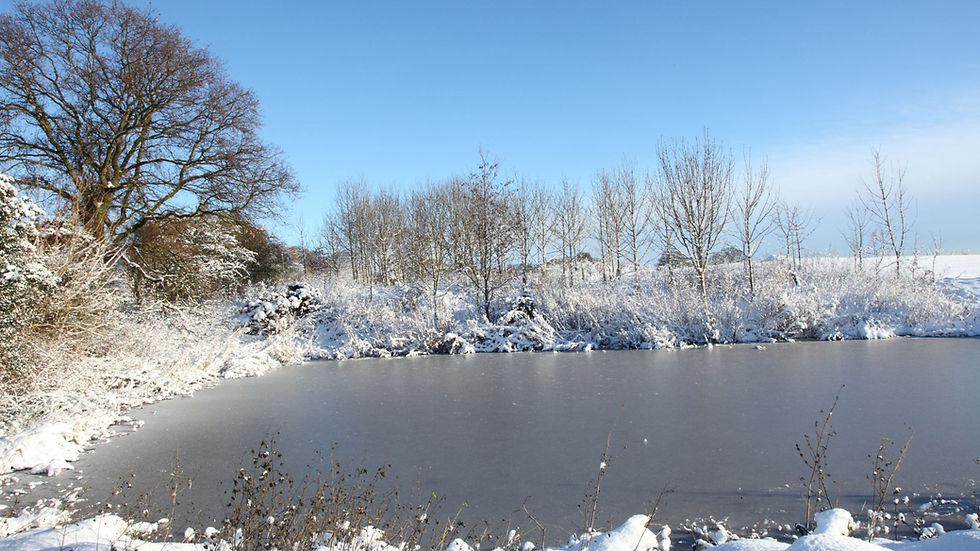
Freezing weather can be one of the most stressful times for a pond. Ice, snow, and prolonged cold temperatures don’t just affect the surface; they can quietly destabilise water chemistry, reduce oxygen levels, and put fish and wildlife at risk.
Understanding what happens beneath the ice and how to respond correctly is key to keeping your pond healthy throughout winter and ready for spring.
Why Freezing Weather Is a Risk for Ponds
When temperatures drop, ponds undergo several changes:
Oxygen exchange at the surface slows or stops under ice
Carbon dioxide and toxic gases can build up beneath frozen water
Decomposing organic matter continues to consume oxygen
pH and KH (carbonate hardness) can become unstable
Fish metabolism slows, making them more vulnerable to sudden changes
Many winter pond problems aren’t visible straight away; they often appear later as fish stress, algae blooms, or pH crashes in early spring.
Never Break the Ice on a Pond
One of the most common mistakes pond owners make is breaking ice.
Hitting or smashing ice sends shockwaves through the water, which can severely stress or even kill fish. Sudden pressure changes can also damage delicate internal organs.
What to do instead
Keep a small area ice-free for gas exchange
Use safe, gentle methods that don’t disturb the water column
Maintain Oxygen Exchange
Even in winter, ponds need oxygen.
A frozen surface prevents harmful gases (such as carbon dioxide and hydrogen sulphide) from escaping. Without gas exchange, water quality can deteriorate quickly.
Best options
Low-level aeration systems
Pond IceFree or de-icer systems
Gentle circulation that avoids disturbing deep, warmer water
The goal is not to warm the pond only to maintain airflow.
Reduce Organic Matter Before and During Winter
Leaves, sludge, and decaying plant material continue to break down even in cold temperatures, consuming oxygen and producing harmful by-products.
Winter preparation tips
Remove fallen leaves regularly
Cut back dying marginal plants
Reduce excess sludge before freezing weather sets in
This significantly lowers the risk of oxygen depletion and water quality problems.
Protect Water Chemistry (pH & KH Stability)
One of the least understood winter risks is pH instability.
Cold weather, rainfall, and reduced biological activity can lower KH (carbonate hardness), the pond’s natural buffer system. When KH drops too low, pH can suddenly drop, becoming dangerous or even fatal to fish.
Why this matters
Low KH = unstable pH
pH crashes often occur during or after winter freezes
Fish are most vulnerable when metabolism is slow
Using stabilising treatments such as OptiLake helps protect the buffer system, keeping pH stable throughout winter and into spring.
Feed Fish Carefully or Not at All
As water temperatures fall below 8°C, fish digestion slows dramatically.
Winter feeding rules
Stop feeding when temperatures consistently drop
Never feed fish under ice
Uneaten food increases waste and oxygen demand
Healthy fish will naturally rest during winter if conditions are stable.
Check Filtration Systems
Many pond filters are turned off during winter, which is often correct, but only if done properly.
Ensure pipes and equipment are protected from freezing
Remove debris from filter systems before shutdown
Check that water circulation won’t freeze or burst pipes
Incorrect winter shutdowns can cause more damage than leaving systems running.
Professional Winter Pond Care Makes the Difference
Every pond is different. Depth, fish stock, organic load, and water chemistry all affect how a pond responds to freezing weather.
At FishLife Pond Services, winter care often includes:
Water testing (pH, KH, ammonia, nitrate)
Aeration and IceFree system checks
Sludge and organic load reduction
pH and KH stabilisation using OASE Lake Therapy
Advice tailored to fish ponds, wildlife ponds, and large lakes
Preventive care in winter is one of the most effective ways to avoid costly problems later.
Final Thoughts: Small Actions, Big Protection
Protecting your pond during freezing weather isn’t about drastic measures; it’s about gentle, informed intervention.
Don’t break the ice
Maintain gas exchange
Reduce organic waste
Stabilise water chemistry
Monitor conditions
If you’re unsure how your pond is coping this winter, FishLife is here to help.
Need help protecting your pond this winter?
Contact FishLife Pond Services to book a winter pond check or water analysis.


Comments