
SeDox Speed vs SeDox Max: Phosphate Control for Ponds and Lakes

How FishLife Pond Services helps reduce algae, cyanobacteria and nutrient problems in larger water bodies
Algae and cyanobacteria blooms are often a sign that a pond or lake has too much available phosphate in the water. Phosphate is one of the main nutrients that feeds algae growth. When levels are too high, water can become green, murky or covered in blooms. In larger ponds and lakes, this can affect oxygen levels, fish health, plant growth and the overall balance of the ecosystem.
For estate lakes, golf course ponds, fishing lakes, farm ponds, council lakes and large domestic ponds, phosphate control is often an important part of long-term water quality management.
Two useful products in the OASE Lake Therapy range are SeDox Speed and SeDox Max. Both help reduce phosphate, but they work in different ways and are suited to different types of water bodies.
You can also watch this short OASE video for a visual explanation of how SeDox Speed and SeDox Max work in pond and lake water treatment.
Why phosphate control matters
Phosphate can enter ponds and lakes through incoming streams, run-off from surrounding land, fish waste, decomposing leaves, sediment build-up, fertiliser input or overfeeding in stocked ponds.
Once phosphate is available in the water, algae can use it as a food source. This can lead to recurring algal blooms, poor water clarity, and, in some cases, cyanobacteria problems.
The aim is not only to treat visible algae, but to reduce one of the nutrients that allows it to keep returning.
What is SeDox Speed?
SeDox Speed is a fast-acting, mineral-based phosphate adsorbent.
This means it binds phosphate as water passes across or through the media. Because of this, it works best where there is good water movement and the phosphate-rich water can be directed past the product.
Because nothing is added directly into the wider water body, there is no swimming downtime and no white precipitate or residue. However, SeDox Speed is mainly focused on phosphate binding. It does not provide the wider range of water-quality benefits that SeDox Max can offer.
In practice, SeDox Speed is often best for smaller systems, controlled flow areas or specific nutrient entry points where water can pass across the product effectively.

What is SeDox Max?
SeDox Max is a more powerful, multi-stage treatment designed for broader pond and lake restoration.
Rather than working only as an adsorbent, SeDox Max uses a binding and precipitation process. This makes it especially useful in larger water bodies where circulation is low, uneven or difficult to control.
SeDox Max binds phosphate, but it also supports the wider biology of the pond or lake. Its benefits include:
Additional oxygen support
Improved nitrogen cycling
Extra carbon supply for plants and bacteria
Extra calcium supply for plants and bacteria
Support for biological activity
Better nutrient balance
This makes SeDox Max highly valuable for larger and more complex water bodies. In these larger systems, phosphate may not only be present in the water. It can also be released from sediment at the bottom of the pond or lake, which can continue to feed algae and cyanobacteria blooms over time.
For this reason, SeDox Max can be a genuine practical solution when algae blooms have become a recurring seasonal problem, particularly in large ponds, small lakes, and low-circulation water bodies

SeDox Speed vs SeDox Max: which is right for your pond or lake?
Both products help reduce phosphate, but they are suited to different situations.
SeDox Speed is usually best for:
Smaller ponds
Good circulation systems
Filters and treatment chambers
Incoming water sources
Fast phosphate binding
No-swim-downtime situations
Situations where visible residue needs to be avoided
SeDox Max is usually best for:
Larger ponds and lakes
Low-circulation water bodies
Golf course water bodies
Fishing lakes
Estate and council lakes
Recurring algae blooms
Cyanobacteria issues
Wider water-quality improvement
The right product depends on the pond size, circulation, phosphate levels, sediment condition, water use and the type of algae problem present.

Important notes about SeDox Max
SeDox Max is highly effective, but it must be used correctly.
After treatment, there is usually a 24–48-hour no-swim period. It can also create a harmless white residue on liners or surfaces.
This residue normally disappears over time, but it is worth considering in smaller ornamental ponds where appearance is important.
For larger ponds, golf course lakes, fisheries, and estate water bodies, these short-term effects are usually manageable when the treatment is properly planned.
Why professional water testing matters
Before treating the water with phosphate, it is important to understand what is happening in the water.
At FishLife Pond Services, we can assess:
Phosphate levels
pH and KH
Oxygen levels
Algae and cyanobacteria risk
Sediment condition
Water circulation
Incoming nutrient sources
Fish and plant health
This science-led approach helps ensure that SeDox Speed, SeDox Max or another OASE Lake Therapy product is used in the right place, at the right time and for the right reason.
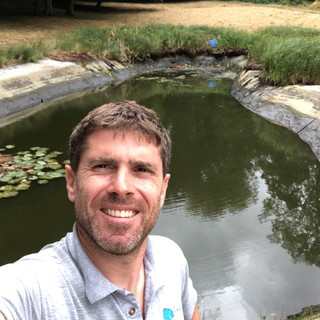
Photo: Garden pond treated with Sedox and other Oase products.
FAQs About SeDox Speed and SeDox Max
What is the difference between SeDox Speed and SeDox Max?
SeDox Speed is a fast-acting phosphate adsorbent. It works best when water can pass through the media, such as in filters, incoming streams, or circulated areas.
SeDox Max is a broader pond and lake treatment. It binds phosphate but also supports oxygen levels, nitrogen cycling, mineral balance and biological activity. It is usually more suitable for larger ponds, small lakes and low-circulation water bodies.
Which product is better for a large pond or lake?
For larger ponds, golf course ponds, estate lakes, fishing lakes and council lakes, SeDox Max is often the better option because it is designed to work across larger water bodies, including areas with lower circulation.
However, SeDox Speed may still be useful at specific entry points, such as an incoming stream or ditch where phosphate-rich water enters the lake.
Which product is better for a smaller pond?
For smaller ponds with good circulation, SeDox Speed can be very effective because the water can move more easily across the phosphate-binding media.
SeDox Max can also be beneficial in smaller ponds, especially where there are wider water quality issues, but the temporary white residue may be more visible on liners or surfaces.
Does SeDox Speed require swimming downtime?
No. One of the key advantages of SeDox Speed is that nothing is added directly into the wider water body, so there is normally no swimming downtime.
This makes it useful for swimming ponds or systems where temporary closure would be inconvenient.
Does SeDox Max require swimming downtime?
Yes. After using SeDox Max, there is usually a 24–48 hour no-swim period.
This is because SeDox Max works through a binding and precipitation process. For larger lakes and amenity water bodies, this can usually be planned in advance.
Will SeDox Max leave a white residue?
SeDox Max can create a harmless white residue on liners or surfaces after treatment. This normally disappears over time. In larger lakes and natural water bodies, this is usually not a major issue. In smaller ornamental ponds with visible liners, it is something to consider before treatment.
Can SeDox help with algae and cyanobacteria?
Yes, SeDox treatments can help reduce one of the main nutrients that feeds algae and cyanobacteria: phosphate. However, algae problems can also be linked to oxygen levels, pH, KH, sediment, organic waste and poor circulation. This is why water testing and professional assessment are important before treatment.
Do I need to test the water before using SeDox?
Yes. Water testing is strongly recommended before applying any phosphate treatment.
At FishLife Pond Services, we can assess phosphate levels, pH, KH, oxygen, sediment, circulation and the overall condition of the pond or lake before recommending SeDox Speed, SeDox Max or another OASE Lake Therapy treatment.
Can FishLife Pond Services apply SeDox treatments for me?
Yes. FishLife Pond Services can assess your pond or lake, test the water and recommend the most suitable treatment plan. This helps ensure the right product is used in the right way, whether you need targeted phosphate binding with SeDox Speed or broader lake treatment with SeDox Max.


Comments